
Selling a house with water damage or mold in NY?
We can help.
Water damage and mold stop most buyers cold. We buy as-is, no remediation required, anywhere in the NY metro.
- No repairs, no clean-up, no showings.
- Typical close in 14 days.
- We have handled this exact situation many times.
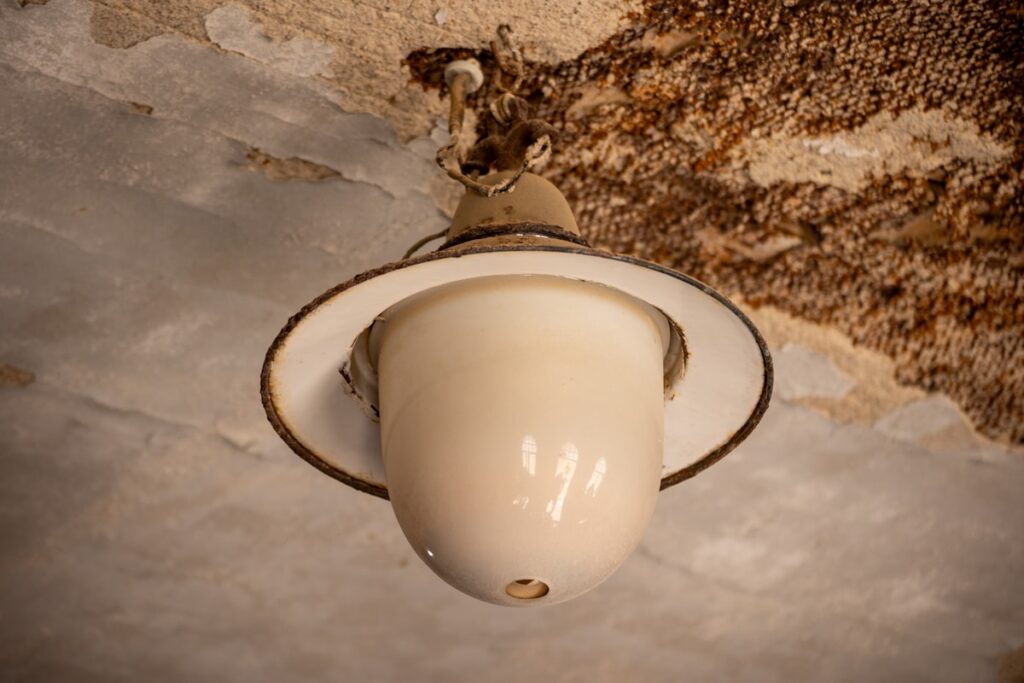
A wet basement that kept coming back. A roof leak that went unaddressed for two winters. A slow pipe leak behind a wall that nobody found until the drywall started bulging. Whatever the source, once mold is visible or moisture damage is documented, the house enters a category that most buyers and every conventional lender will walk away from fast.
Water damage is the most common disaster a New York house faces, and also the most misunderstood at sale time. Whether yours came from a burst pipe last winter, a roof that finally gave, or a flooded basement that keeps returning, this page walks through what the damage really means for value, insurance, and the sale itself.
If you have tried listing a water-damaged home, you already know what happens. A buyer makes an offer, their inspector finds mold or saturated framing, the lender orders an environmental report, and the deal dies. FHA and conventional loans both require the property to be in livable, safe condition. A home with active mold or water intrusion fails that standard. The buyer either cancels outright or comes back asking you to fund full remediation before closing. Professional mold remediation in the NY metro area is not cheap, and there is no guarantee the underlying moisture problem is solved even after you pay for it.
Why banks will not lend on a home like this
Lenders require an appraisal that confirms the property is safe and free of health hazards. Mold, even in a single room, is enough to trigger a mandatory remediation condition. The appraiser notes it, the underwriter flags it, and the loan goes on hold until a licensed remediation contractor clears the property in writing. Some lenders require a clearance air test on top of that. All of this takes weeks, costs money you may not have right now, and still depends on finding the source of moisture and permanently fixing it. If the source is a foundation issue, a failing drainage system, or a flat roof with deferred maintenance, the repair bill can be substantial before you even get to mold cleanup.
Cash buyers are the only realistic path when financing is off the table. But not every cash buyer will touch serious water or mold damage. Many retail investors flip homes and still want properties that need only cosmetic work. A house with structural moisture damage requires a different buyer, one who understands remediation costs, carries the right contractors, and can absorb that scope of work.
What EZ Home Buyers actually does with these properties
We have been buying homes in this condition across NYC, Long Island, Westchester, and New Jersey since 2000. Water damage and mold homes are not unusual for us. Nick York has seen homes where every room on the lower level was affected, where crawl spaces had standing water, where entire ceilings had to come down. We price those realities into our offer. We do not come back after inspection asking for reductions because our evaluator spotted a problem. We price to the condition we see.
When you contact us, we schedule a walkthrough at your convenience. We look at the full picture: the source of moisture, the extent of affected materials, what it will take to bring the property back. We make a written cash offer within 24 to 48 hours of seeing the property. If you accept, we can close in as little as 14 days. There is no remediation required on your part, no repairs, no cleaning. You leave what you cannot take and we handle the rest.
The health question that often drives the timeline
Some sellers contact us because family members are already experiencing symptoms. That is a different kind of urgency than a financial one, and it is worth acknowledging directly. If the house has become unsafe to occupy, waiting three to six months on the open market is not a viable option. Closing in two weeks and moving on is, practically speaking, the healthier choice even if the sale price is lower than you hoped for.
Others are selling a property they no longer live in, an inherited home, a rental, a second property that flooded during a storm and has sat empty since. In that case, the longer the property sits unoccupied with moisture damage, the worse the mold spread typically gets. Selling quickly limits further deterioration and the liability that comes with an unoccupied, hazardous structure.
What a typical transaction looks like from first call to closing
A homeowner on Long Island reached out after a sump pump failure left the finished basement soaked for several days before anyone knew about it. By the time she called us, the lower level had visible mold on the framing and the carpet had been removed but the subflooring was still affected. She had already received one estimate for remediation that was well beyond what she could spend. We visited the property, made a written offer within two days, and closed in 12 days. She did not replace a single board or file an insurance claim she did not want on her record. The sale was straightforward and handled with a local title company she chose.
We buy single-family homes, two to four family properties, condos, vacant land, and mobile homes throughout the NY metro area. We do not buy co-ops. If your property has water damage or mold and you want to know what we can offer, call Nick York at (516) 964-7222 or email info@ezhomebuyers.com. There is no obligation and no pressure to accept anything.
Neighborhoods we serve across the NY metro
This situation can come up anywhere we buy houses. The same process, terms, and timeline apply across our entire service area.
Queens: Bayside, Forest Hills, Douglaston, and Little Neck. Brooklyn: Park Slope. Long Island: Levittown, Great Neck, Great Neck Estates, Kings Point, Lake Success, and Manhasset. Westchester: Yonkers.
For more background, see FEMA flood map service.
Related situations we handle
What Water Damage Does to a House, and to Its Sale
Water is patient and thorough. A supply line that lets go while you are at work can run for eight hours and touch every floor below it; an ice dam can push melt under shingles all February; a foundation seep can spend a decade quietly rotting sills nobody sees. The visible stain is rarely the whole story, which is exactly why financed buyers and their inspectors treat any water history like an unexploded shell. And the clock matters enormously: mold can establish inside wet wall cavities within a day or two of saturation, which converts a drying problem into a remediation project with its own specialists, containments, and invoices.
The retail market punishes water history twice. First at inspection, when the moisture meter comes out and the negotiation reopens; then at disclosure, because New York sellers must either complete the property condition disclosure honestly, water and mold questions included, or credit the buyer five hundred dollars and watch them assume the worst anyway. Fresh paint over a stain fools nobody and reads as concealment, the single fastest way to turn a nervous buyer into a departed one. Houses with real water histories routinely go through two and three collapsed contracts before their sellers stop paying for optimism.
Remediation pricing explains why. Professional drying alone runs thousands; gut-and-rebuild of a finished basement, tens of thousands; mold remediation with clearance testing, more; and if the source was a chronic foundation or grading issue, the fix-the-cause work comes first or the spending repeats. Do the arithmetic honestly and the renovation path through a serious water event often consumes six months and a sum that would startle you, before the house can even face inspectors with confidence.
Insurance, Claims, and Selling Without the Rebuild
Homeowner policies cover sudden and accidental water, the burst pipe, the failed washer hose, but generally exclude gradual seepage, groundwater, and flood, which lives in its own federal program. That line between sudden and gradual is where claims go to die, and adjusters patrol it closely. If you have an open claim, document everything, mitigate honestly, and know that you can sell the house while the claim proceeds: the claim belongs to you for damage during your ownership, the house sells as it stands, and your attorney squares the settlement timing at closing. We buy houses mid-claim regularly, and the sale does not forfeit what the policy owes you.
Selling to us replaces the entire rebuild-then-market sequence with one step. We buy wet houses, dried-but-scarred houses, moldy houses, and flood-zone repeat offenders as they stand, price the remediation and rebuild as line items you can read, and send our own crews in after closing. No disclosure dance, because we are the buyer who already assumes the worst and prices it; no inspection renegotiation, because the inspection already happened when we walked it; no six months of contractors in a house you are done with.
If the water is active as you read this, triage first: stop the source if you can, get standing water out, move what matters, and call your carrier while the event is fresh, because late notice is the cheapest way to lose a valid claim. Then, when the urgency subsides, make the strategic decision with numbers instead of exhaustion. A written offer on the house exactly as the water left it costs nothing, and holding it next to the remediation quotes is the clearest view of your options you will get.
The Scenarios We See Most, and What Each One Means
The vacant-house freeze is Long Island’s signature winter disaster: an estate or a snowbird house, heat off or a boiler quit, a supply line bursts in January and runs until someone notices in March. These are the most dramatic files we buy, ceilings down, floors cupped, mold established, and also the most routine for our crews, because the damage, however vast, is legible. The chronic basement is the opposite animal: seepage every heavy rain, a sump that keeps up except when it matters, efflorescence and that smell no dehumidifier defeats. Chronic water is a grading, drainage, and foundation conversation, and retail buyers fear it more than a one-time flood because it promises repetition. Sewer backups add insurance complexity, standard policies exclude them without a specific rider, and flood-zone houses with repetitive-loss histories carry records that follow the address through federal databases and insurance claim histories that follow it through CLUE reports. Every one of these has a different retail story and the identical cash ending: priced honestly, bought as-is, remediated on our dime.
Know what you are up against if you attempt the cosmetic route, because the inspection industry is built to catch it. Moisture meters read through fresh paint, thermal cameras see wet framing behind pristine drywall, and mold air sampling turns a suspicion into a lab report attached to the negotiation. Kilz over a stain is not a repair, it is a confession with a receipt, and seasoned inspectors treat it as an invitation to look harder everywhere else. The sellers who fare worst on the retail market are not the ones with the worst damage; they are the ones whose houses look repainted.
If tenants occupy the wet space, a basement apartment especially, the file compounds: habitability obligations, a possibly unpermitted unit, and damage all braided together. We buy that braid whole, occupants and all, which is frequently the only version of a sale that works at all. Whatever your scenario, the sequence with us never changes, walkthrough that includes the wet history told plainly, written offer with remediation as a visible line, closing before the next storm tests the sump. Water rewards speed and punishes hope. Sell accordingly.
What we actually do with the house after closing, and why it matters to your price
The reason we can pay more for wet houses than the fear-pricing crowd is that we do not price fear, we price scope. After closing, our crews run the full professional sequence: source correction first, the roof, the grading, the plumbing, the drainage, then structural drying with monitored equipment, then removal of everything water compromised, then licensed mold remediation with clearance testing where conditions require it, then the rebuild to renovated-market standard. Because we know that sequence’s real cost to the dollar, from doing it constantly, our offers subtract actual numbers rather than nightmare estimates. A wholesaler pricing your water damage from a doorway guesses high and offers low. We measure, and the difference between guessing and measuring is money that belongs in your wire, not their margin.
If the water already won a few seasons ago
Plenty of the wet houses we buy were not flooded last month but abandoned to their moisture years back: the estate basement nobody dried in 2022, the house winterized badly once and never quite recovered, the rental surrendered to its seepage. Time compounds water damage on a schedule, each freeze-thaw cycle widening what the first event started, each humid summer feeding what the first drying missed, and owners assume the accumulated neglect has made the house unsellable. It has not. It has made the house exactly what our crews rebuild every month, and the offer prices the accumulated scope the same honest way it prices fresh damage. The only thing another wet season adds is subtraction, so whatever year your water story started, the right year to price the ending is this one.
A last category worth naming: the half-fixed house. You dried it yourself, replaced some drywall, maybe won a partial claim, and the repair stalled at eighty percent when money, energy, or the marriage ran out, leaving a house that is neither damaged enough to write off nor finished enough to list. We buy the eighty-percent houses constantly, and the offer credits every bit of real work already done, your demolition saved us demolition, your new subfloor is a line in our favor and therefore yours. Partial progress is not wasted just because you are done being the general contractor. It is equity, and we count it.
Season matters more with water houses than any other kind we buy, so let the calendar sharpen the decision. A wet or half-repaired house entering a Long Island winter faces freeze cycles that multiply the damage, and one entering storm season faces the next test of whatever failed last time; meanwhile insurance renewals on damaged houses arrive with harder questions and higher numbers each cycle. Selling ahead of the season that threatens your particular house is worth real money, and if that season is close as you read this, say so in the first call and we will build the timeline to beat it.
We buy water damaged houses throughout Nassau County, Suffolk, Queens, and Brooklyn, from single flooded basements to whole-house losses, and every offer arrives in writing with the remediation math visible, so you decide with facts instead of fear.
If you are facing one of these, we can help with that too. Same cash offer, same as-is purchase, same fast closing.
Sellers in similar spots also ask us how to sell a rental property as a tired landlord or sell a house with bad tenants.
We buy across Long Island, Queens, Brooklyn, Westchester and New Jersey, so you can sell your house fast in Port Richmond NY, sell a house fast in Hoboken NJ, or read about how we buy houses in North Bergen NJ.
How it works
From first call to cash in hand.
- Day 11
Tell us about the house.
Address, condition, situation. 60 seconds on the form or one phone call. We do not need pictures, repairs, or a clean house.
- Day 2 to 32
We bring you a fair cash offer.
A quick walk-through (in person or virtual). We hand you a written offer with the math behind it. No pressure, take a few days to decide.
- Day 7 to 143
We close. You walk out with the check.
You pick the closing date. Title company handles the paperwork. Cash wires same day. Leave anything you do not want behind.
Compare your options · the real math
Don't compare list prices.
Compare what you actually take home.
Worked example on a $475,000 NY metro home that needs $25K–$50K of work. Same property, two paths. The headline price favors the realtor. The net check almost never does.
Sell to us · Cash, as-is
- Our cash offer$420,000
- Repairs you pay for$0
- Agent commissions$0
- Closing costs (we cover)$0
- Holding costs$0
List with a realtor
- Likely sale price$465,000
- Repairs to qualify for buyer financing−$50,000
- Agent commission (6%)−$27,900
- Closing costs you pay (1.5%)−$6,975
- 4 mo. holding (tax, util, ins.)−$8,000
Same property, two timelines
0 · 2 · 4 · 6 · 8 · 10 · 12 months
How do you decide what to offer?
We start with what your house could sell for after repairs (the after repair value). Then we subtract the cost of repairs, holding costs (taxes, insurance, utilities while we own it), closing costs on both sides of the deal, and a reasonable margin for our work. The remainder is your offer. We walk you through the math line by line so you can see exactly how we got there.
Are there any fees or commissions?
None. No agent commissions, no listing fees, no closing costs from your side. The number on the written offer is the number that hits your account at closing.
How fast can we actually close?
Typically 7 to 14 days from when we sign the contract. The bottleneck is the title company, not us. If you need longer to move out, you pick the date.
What if my house has tenants who won’t leave?
Tenants in place is fine. We buy occupied properties regularly and handle the tenant relationship from there.
Do you buy houses in foreclosure?
Yes, regularly. We can close before an auction date if there is enough time. The earlier you reach out, the more options we have.
What if I owe more on the mortgage than the offer?
This is an underwater situation. We can sometimes work with your lender on a short sale. Tell us up front so we can plan the right path.
Can I cancel after I sign the contract?
Yes. We offer a 3-day cancellation guarantee, no questions asked.
What types of properties do you buy?
Single family, 2 to 4 family, condos, vacant land, and mobile homes. We do not buy co-ops.
How is selling to you different from Opendoor or HomeVestors?
Opendoor uses an algorithm and won’t touch homes that need real work. HomeVestors is a national franchise, you’ll talk to whoever owns the local franchise this month. We are family owned and local, and our team handles every deal directly from first call to closing.
Will I have to clean out the house first?
No. Walk away with what you want, leave the rest. We handle clean-out, repairs, and disposal at our cost.
Do I need to make any repairs before selling?
No. We buy houses completely as-is, from light cosmetic wear to major structural problems. You never fix, paint, or update anything.
Which areas do you buy in?
We buy houses in Queens and all five NYC boroughs, on Long Island in Nassau and Suffolk, across Westchester, and in most of northern and central New Jersey. If you are not sure whether we cover your town, submit your address anyway. We probably do.
Ready when you are.
No pressure either way.
Submit your address. A team member will call within 24 hours, walk the property in person or by video, and put a written offer in your hand.